
From Structure to Site: The Lifecycle of Concrete
Every demolition project tells the same story in reverse. A building goes up, gets used for decades, and eventually comes down. The question is what happens to a building once it has been deconstructed.
What Actually Happens to a Demolished Building
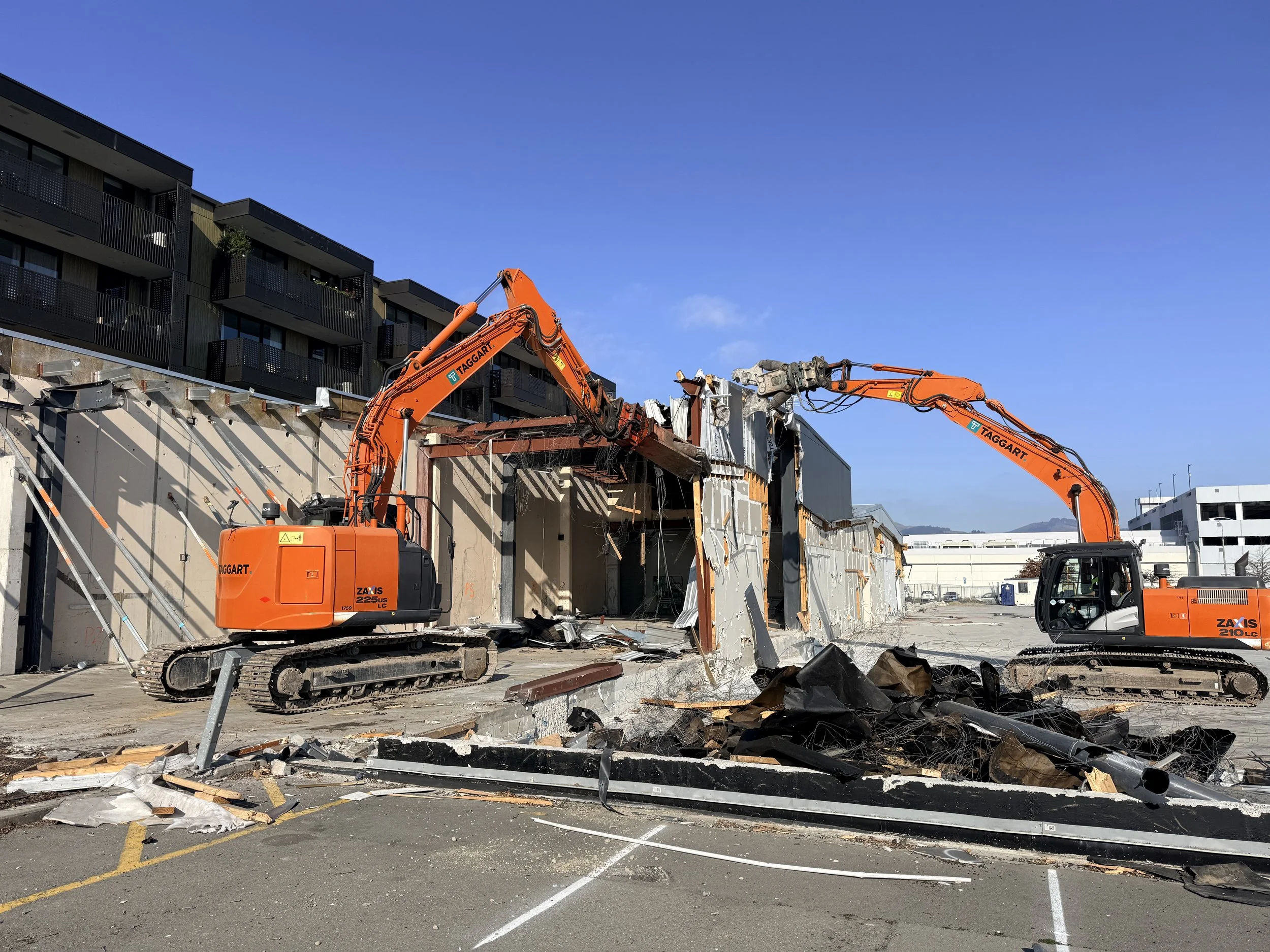
When Taggart demolishes a residential or commercial building, the first thing to go isn't the structure; it's everything inside it. Plasterboard, wiring, fittings, anything that isn't structural gets soft stripped and sorted first. Once the soft strip process is complete, the building itself methodically comes down, so materials can be separated as they're removed rather than sorted later from a mixed pile.
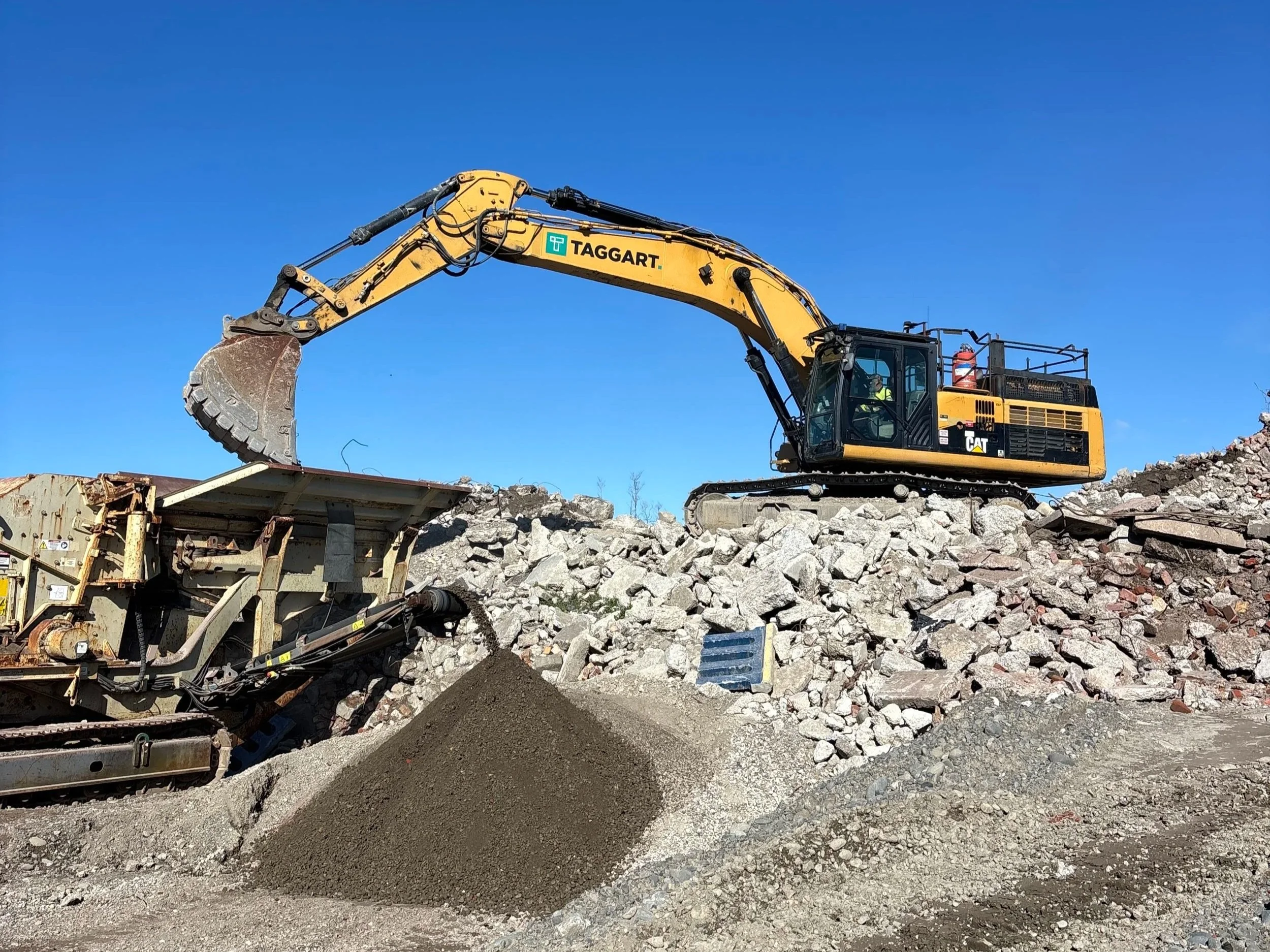
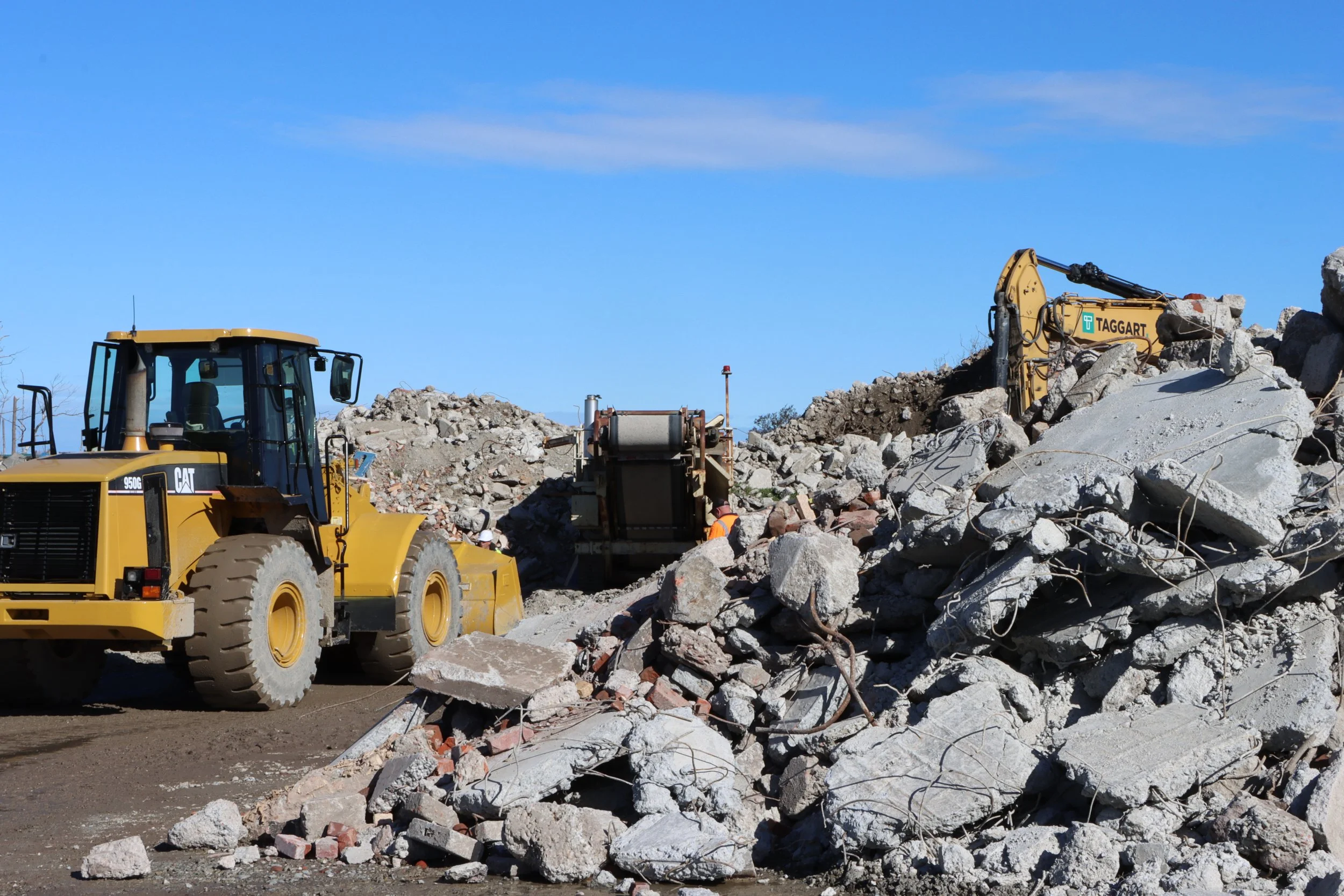
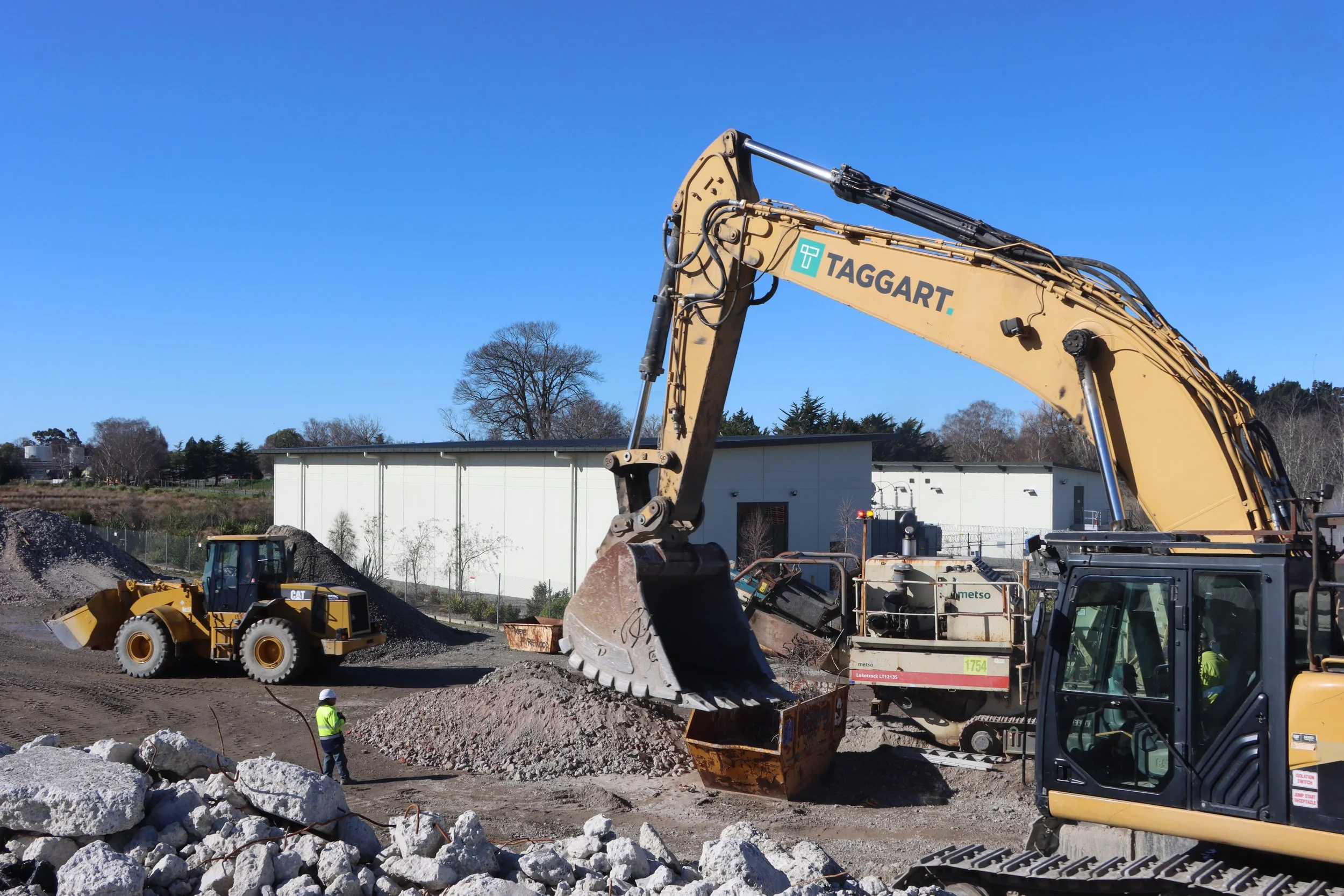
Concrete makes up a large share of what's left. Rather than trucking it straight to landfill, it comes back to our yard, where it's crushed and turned into something new: AP80, a graded aggregate used as a base course for bulk fill, yards and hardstand.
Why This Matters More Than You'd Think
Construction and demolition waste makes up around half of everything that goes to landfill in New Zealand. That's a significant portion of a country's landfill capacity coming from a single industry, when much of it is material that doesn't need to end up there at all.
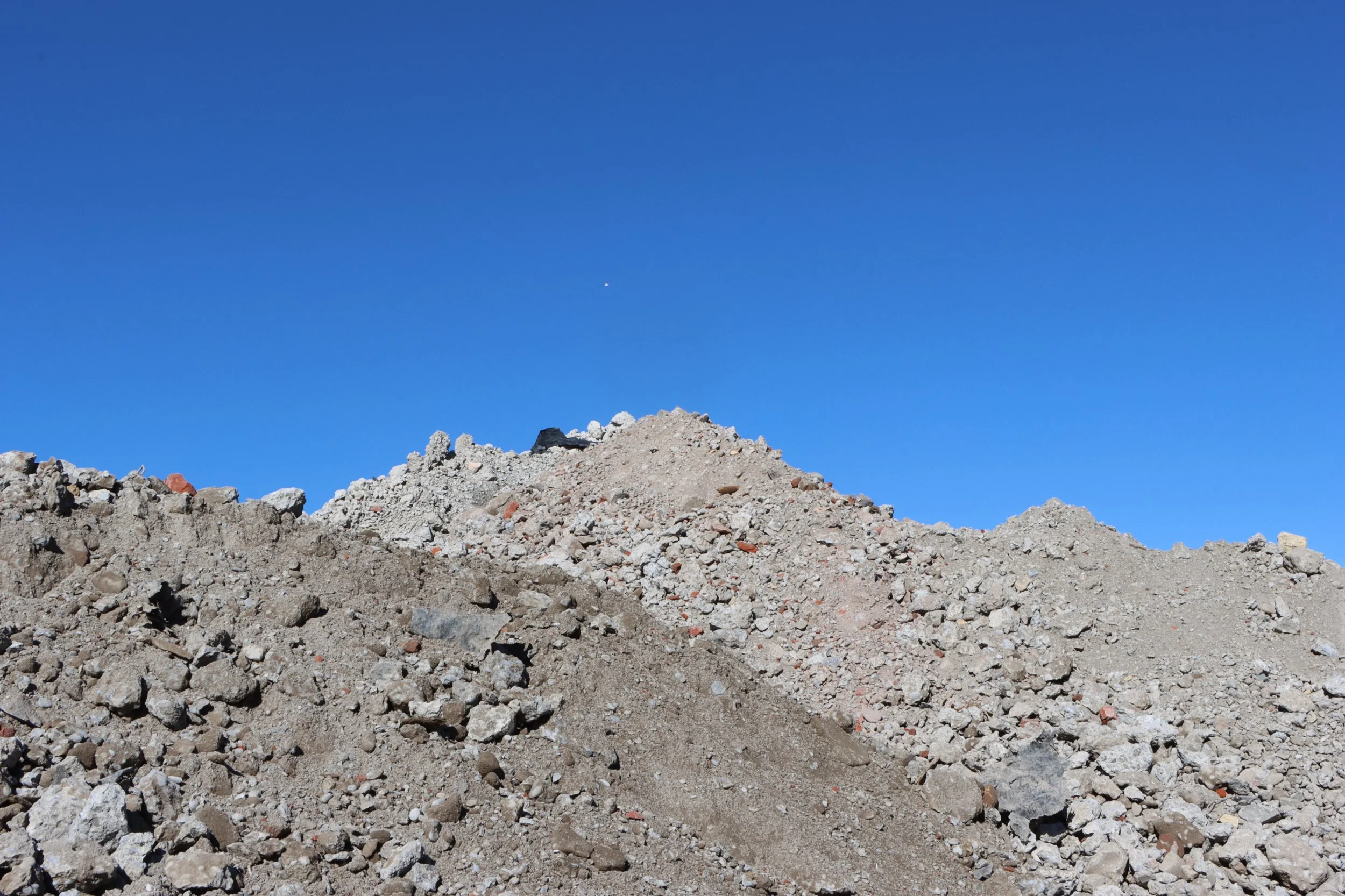
Concrete is one of the most reusable materials on a demolition site, if it's handled properly. That "if" is doing a lot of work, though; it depends on sorting it correctly at the point of demolition, testing it, and processing it to a standard that makes it usable again. Skip any of those steps, and you're left with rubble, not aggregate.
What Goes into Getting It Right
Every load of crushed concrete leaving our yard is tested and asbestos-free before it goes anywhere, checked well before it reaches the crusher.
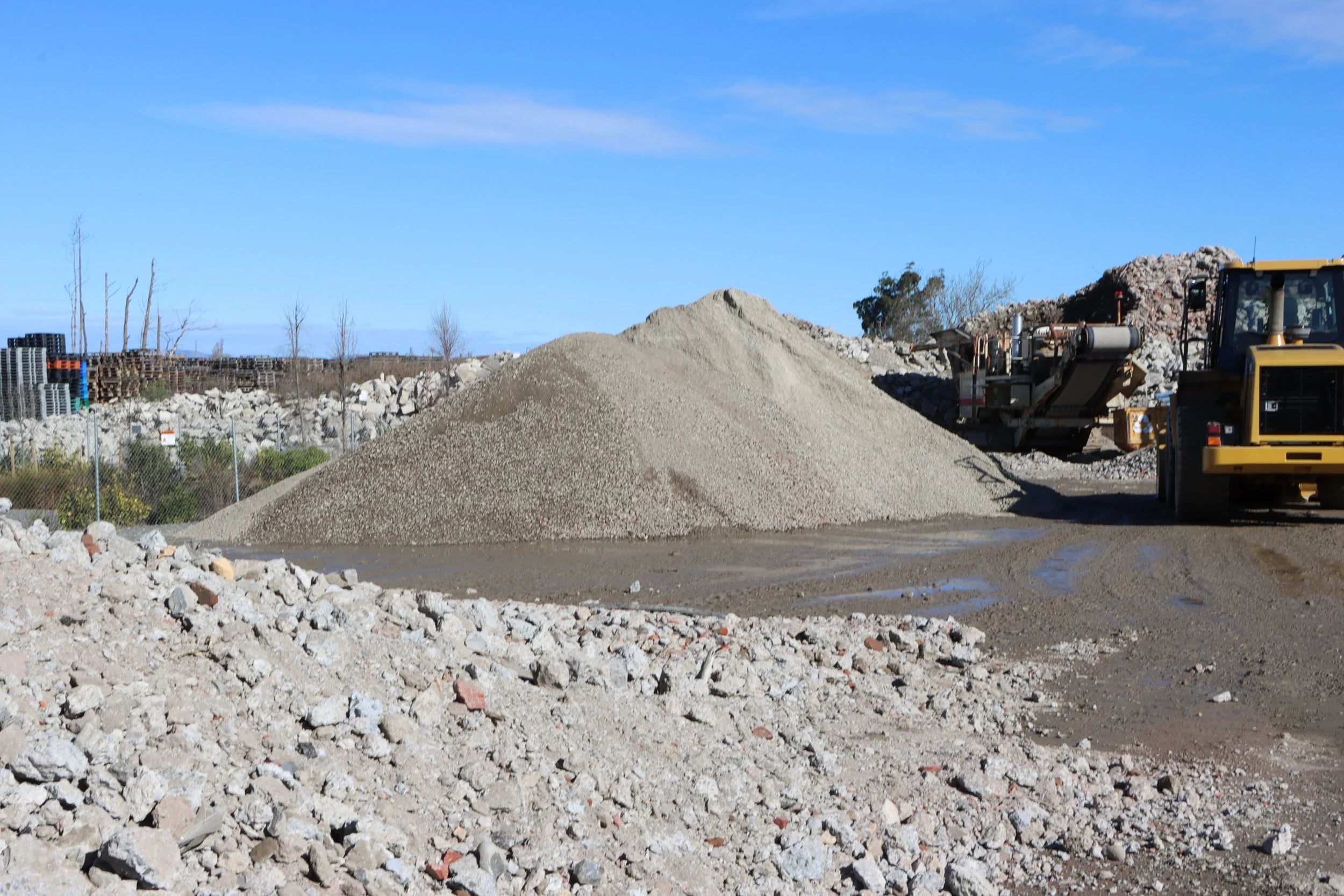
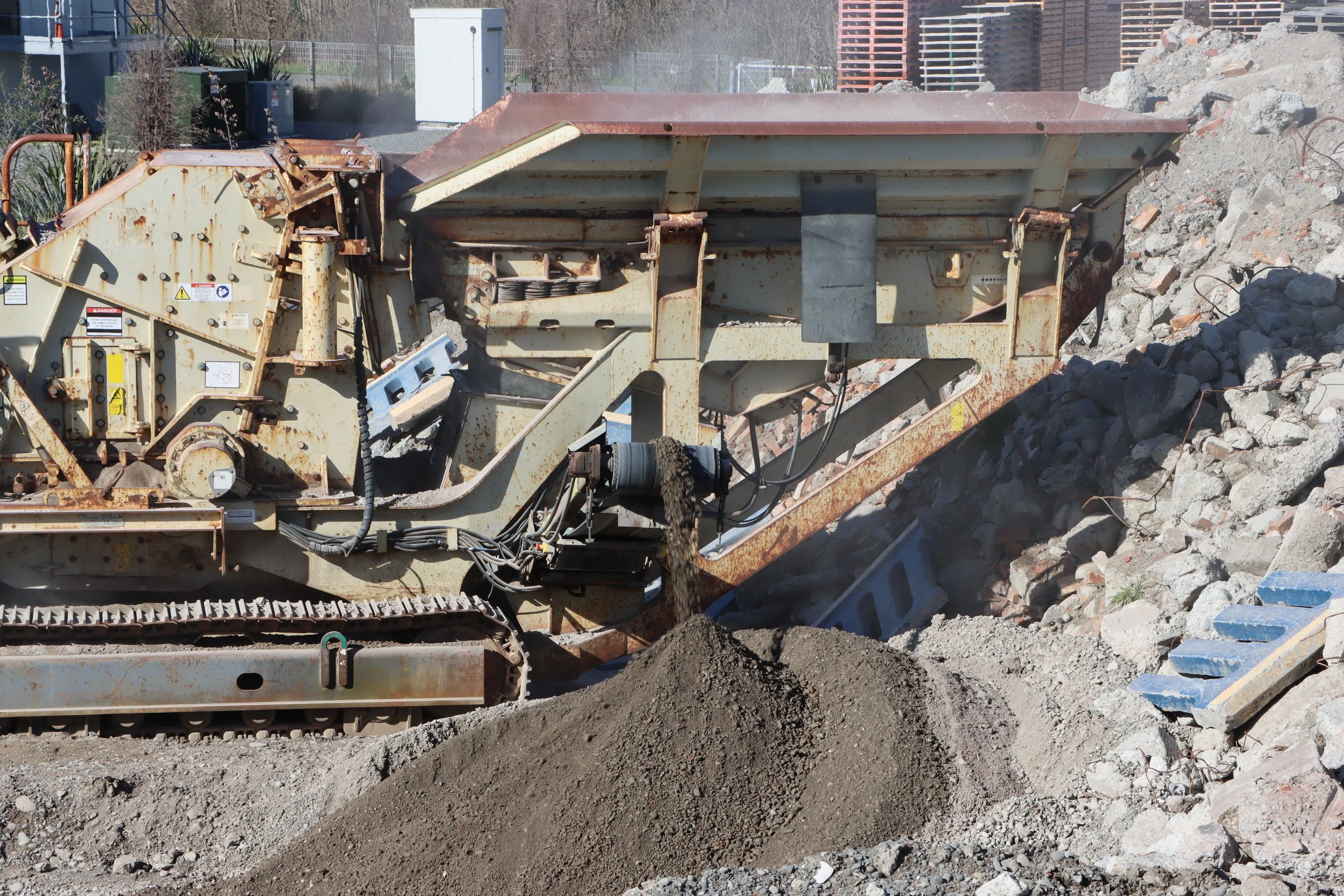
From there, it's crushed and graded to AP80, meaning particle sizes up to 80mm, with fines and larger fragments blended to a consistent mix. Our crusher separates the demolition material into three outputs: AP80, fines, and scrap metal or rebar, so each can be handled and reused the right way rather than treated as a single mixed waste stream. That grading is the difference between a product that compacts properly, drains well and holds its shape under load, and one that doesn't. Each batch is checked for:
Asbestos-free status, confirmed before processing begins
Particle size, graded to AP80 (0–80mm)
Contaminant removal, steel, timber and other non-concrete material sorted out at the stripping stage
Consistency, an even blend of fines to coarse aggregate, not just crushed chunks
It has also been independently checked and approved by Springline.
Why It's Worth Considering for Your Next Project
Beyond the environmental case, there's a practical one. Crushed concrete typically costs less than quarried AP80, since it skips the extraction and transport that goes into quarried material. As it comes from our own demolition projects, supply isn't tied to quarry output the same way, and sourcing it locally cuts down on the number of trucks needed to bring material to site. With our crusher processing up to 500 tonnes a day, we can keep up with demand without long lead times.
Performance-wise, it holds up the same as quarried aggregate for base course use. The only real difference is where it came from, and what didn't end up in landfill to get there.
If you are interested in ordering crushed concrete for your next project, please contact or fill in the form below:
Mike Smart
mike.smart@taggart.net.nz
027 228 7270